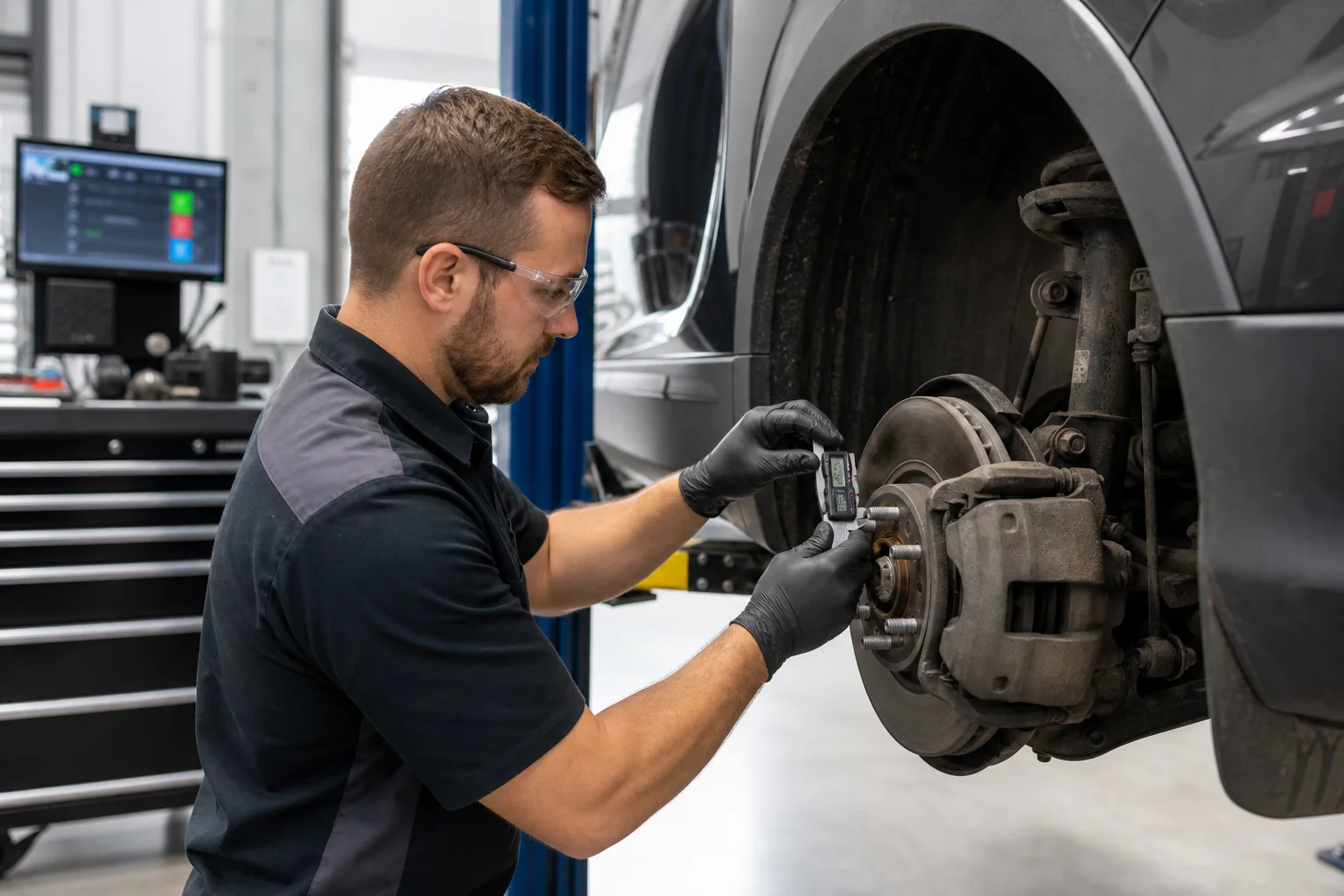
How to read tire inspection reports covering tread depth logs, uneven wear patterns, and sidewall observation classes after extended road travel.
Why tire reports differ after vacation routes
Long highway segments, trailer tongue weight, and under-inflated spare use during emergencies produce tire observation categories that may not appear on routine rotation visits. Educational content describes field names without prescribing specific tire brands or replacement timing.
Heat buildup from sustained speed and loaded roof racks influences how technicians document sidewall bulge classes and inner liner observations.
Tread depth and wear pattern fields
Inspection forms typically record measurements at three points across the tread, wear bar proximity notes, and alignment correlation fields when uneven patterns are observed.
- Tread depth log: Thirty-second inch or millimeter readings at inner, center, and outer tread grooves.
- Wear pattern class: Shoulder wear, center wear, or diagonal feathering categories linked to inflation history.
- Sidewall observation: Scuff, bulge, or cracking classes with location notes relative to wheel position.
- Wheel and lug review: Torque verification fields, corrosion classes, and balance weight observation notes.
- TPMS sensor status: Battery age categories and last relearn procedure fields when scan tools are used.
Pressure history and trip load context
Owners who document cold pressure readings before departure and after return can align shop fields with personal logs. Modules describe how pressure delta categories appear on inspection forms — as observation notes requiring licensed follow-up when safety relevance is documented.
Practical recommendation formats for shop dialogue
Checklists on dendrochron.info connect tire observation classes to neutral questions: which positions showed the greatest depth variance, whether rotation history is recorded, and whether alignment angles were measured after the trip.
Summary
Tire assessment after a long journey focuses on tread depth log literacy, wear pattern field definitions, and neutral planning vocabulary for post-trip wheel and tire review.
Alignment printouts and tire wear correlation
Tire inspection reports list tread depth logs alongside wear pattern classes and alignment angle references when uneven patterns are observed. Modules on dendrochron.info explain how wear fields relate to inflation history without directing specific correction packages — authorization remains with licensed staff.
Seasonal and load-history context
Vehicles used with roof boxes, trailer tongue weight, or emergency spare use during travel accumulate tire wear differently. Inspection notes may reference load history when available. Understanding context fields prevents misreading a monitoring entry as an immediate replacement directive.
TPMS and sensor documentation literacy
Scan tool exports may list TPMS battery age categories and last relearn procedure fields. Educational materials describe when observation classes warrant prompt licensed review versus scheduled documentation updates — always as information categories, not vehicle-specific conclusions.
Rotation history and position-specific wear
Shop forms may record which wheel positions showed the greatest tread variance and whether rotation history is documented. Modules on dendrochron.info connect these fields to neutral questions owners can bring to a licensed facility after long-distance travel.
Using dendrochron as reference before shop authorization
Educational modules on dendrochron.info describe documentation formats, glossary entries, and neutral planning vocabulary for post-trip vehicle review. Content supports orientation and structured shop dialogue — it does not replace hands-on evaluation by a licensed repair facility or manufacturer service procedures.
When observations involve steering, brakes, restraint systems, tires, engine internals, or high-voltage components, we recommend consulting a qualified workshop before authorizing service. dendrochron explains learning formats and information delivery; operational decisions remain your responsibility together with your chosen service provider.
For terminology questions about this article or related modules, use our contact form. The editorial team responds through a 24/7 message queue from our Denver coordination office at 1801 California Street, Suite 2400, Office 2408, Denver, CO 80202, United States.