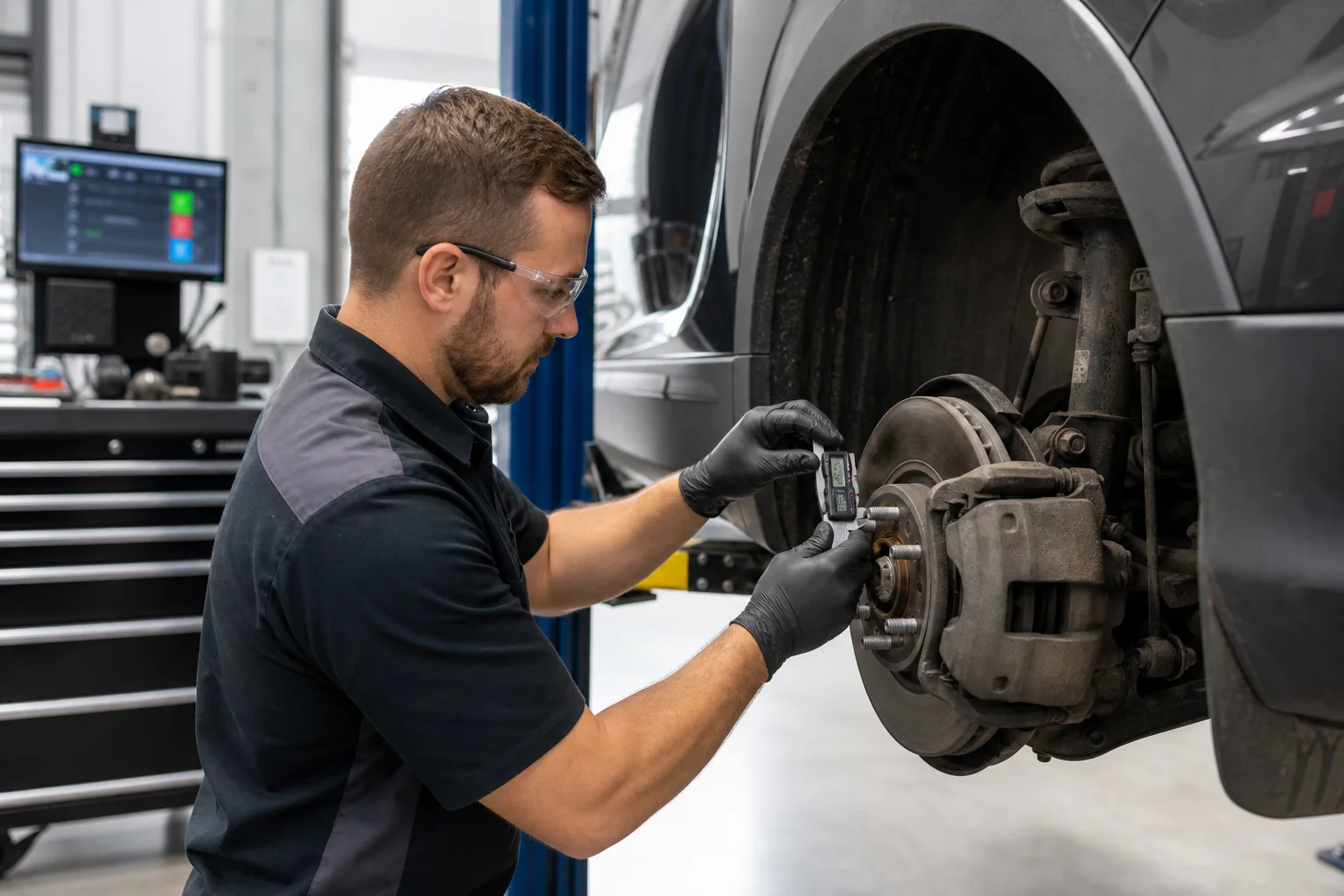
Learn how brake inspection reports describe pad thickness, rotor scoring, and fluid condition for vehicles after mountain descents and heavy traffic segments.
Brake documentation after sustained downhill use
Extended mountain driving and stop-and-go vacation traffic produce inspection notes that differ from routine commuter brake checks. Educational modules explain field names for pad thickness, rotor scoring, and fluid moisture observations without directing specific part replacement.
Heat soak from repeated descents influences how technicians document rotor coloration and pad transfer layers. Understanding observation categories prevents misreading monitoring entries as mandatory immediate work.
Pad thickness and rotor observation fields
Reports typically record inner and outer pad measurements, rotor minimum thickness notes, and scoring classes. Neutral definitions clarify that visual inspection supplements — but does not replace — manufacturer test procedures where specified.
- Pad thickness log: Millimeter or fractional inch readings at multiple points on each axle.
- Rotor scoring class: Groove depth categories, heat checking observations, and runout notes when measured.
- Caliper slide observation: Pin lubrication status and bracket corrosion classes on multi-point forms.
- Fluid condition field: Moisture content notes, color observations, and last exchange mileage when recorded.
- Parking brake engagement: Cable play categories and drum or rotor parking surface observations where applicable.
Electronic brake control notes
Technicians may document ABS module scan fields, brake booster vacuum readings, and stability control sensor status during post-trip reviews. Scan tool exports help owners understand what a technician compares during evaluation.
Educational content separates electronic monitoring fields from mechanical wear observations so owners can discuss priorities with a licensed facility.
AI-assisted checklist formats
Some editorial workflows use artificial intelligence to organize dense brake inspection templates into section summaries. Human editors verify field names and maintain educational boundaries. AI does not publish autonomously on dendrochron.info.
Summary
Vacation brake system check education focuses on pad thickness log literacy, rotor scoring field definitions, and neutral planning vocabulary for post-trip safety review.
Adaptive learning versus mechanical observations
Brake inspection reports after vacation travel may list pad thickness logs, rotor scoring classes, and ABS-related scan fields in the same document. dendrochron educational modules define each field type so readers distinguish electronic monitoring notes from mechanical wear observations.
Planning vocabulary for brake service documents
Maintenance planning spreadsheets may include phased pad monitoring entries, rotor minimum thickness notes, and fluid exchange mileage. These describe document line labels used in household planning — not projections of future shop totals or part selections.
Manual and electronic brake platform notes
Hybrid and electric platforms may document regenerative braking contribution alongside conventional pad wear fields. Educational content on dendrochron.info presents these as observation classes requiring licensed evaluation when safety relevance is noted.
When to seek licensed review promptly
Active warning lamps, pedal feel changes, or fluid contamination observations documented on inspection forms may warrant immediate professional review. Modules describe these as safety-relevant observation classes — not remote diagnoses for any specific vehicle on dendrochron.info.
Using dendrochron as reference before shop authorization
Educational modules on dendrochron.info describe documentation formats, glossary entries, and neutral planning vocabulary for post-trip vehicle review. Content supports orientation and structured shop dialogue — it does not replace hands-on evaluation by a licensed repair facility or manufacturer service procedures.
When observations involve steering, brakes, restraint systems, tires, engine internals, or high-voltage components, we recommend consulting a qualified workshop before authorizing service. dendrochron explains learning formats and information delivery; operational decisions remain your responsibility together with your chosen service provider.
For terminology questions about this article or related modules, use our contact form. The editorial team responds through a 24/7 message queue from our Denver coordination office at 1801 California Street, Suite 2400, Office 2408, Denver, CO 80202, United States.